
SEO has entered a new phase.
Search isn’t just a list of links anymore. It’s answers. Summaries. Recommendations. And they’re coming from everywhere — Google, AI tools, social platforms, and communities.
That shift changes how visibility works. But it also creates a massive opportunity.
In 2026, the teams that win won’t be the ones chasing tactics. They’ll be the ones building clarity, authority, and relevance across every place people look for answers.
That’s what this guide is designed to help you do.
Whether you’re new to SEO or evolving an existing strategy, you’ll learn a step-by-step process for building an SEO strategy that works in today’s search environment — and keeps working as things change.
In this guide, you’ll learn how to:
- Set SEO goals that drive real business results
- Find topic opportunities across platforms
- Create content that gets ranked, featured, and cited
- Build visibility for search engines and AI tools
- Keep your strategy working as things change
Define Your SEO Goals
Before you research a single keyword or write a line of content, you need to know what success looks like for your business.
The biggest mistake I see SEOs make is chasing rankings and traffic instead of revenue.
What matters is if SEO drives qualified leads, reduces customer acquisition costs, or increases brand awareness in your target market.
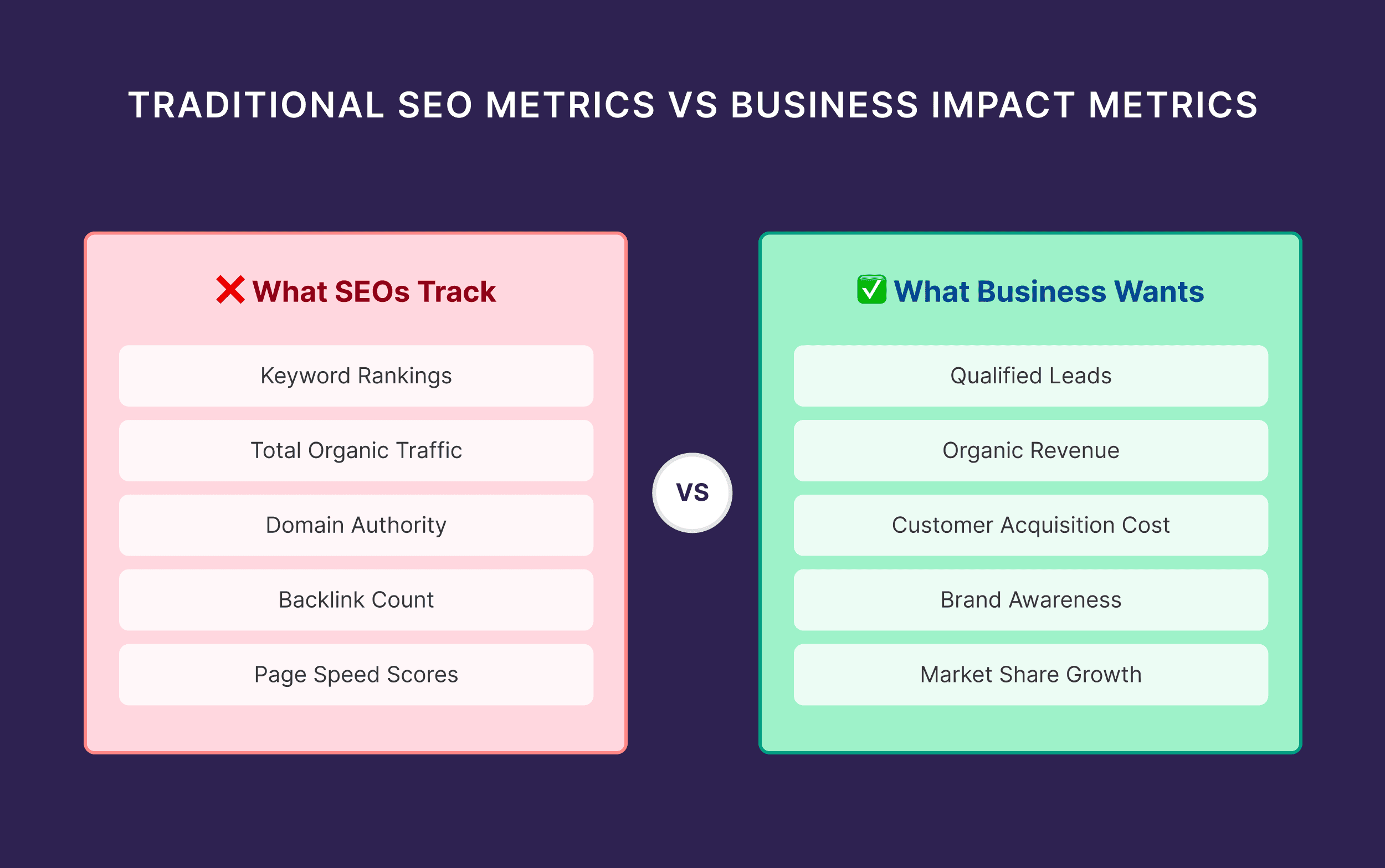
This disconnect is why you may struggle to prove ROI and secure adequate budgets. You’re optimizing for metrics that don’t directly translate to business value.
Here’s how to fix it.
Start With Business Outcomes, Not SEO Metrics
Ask yourself: What would make SEO a clear win for your business this year?
Your answer might be:
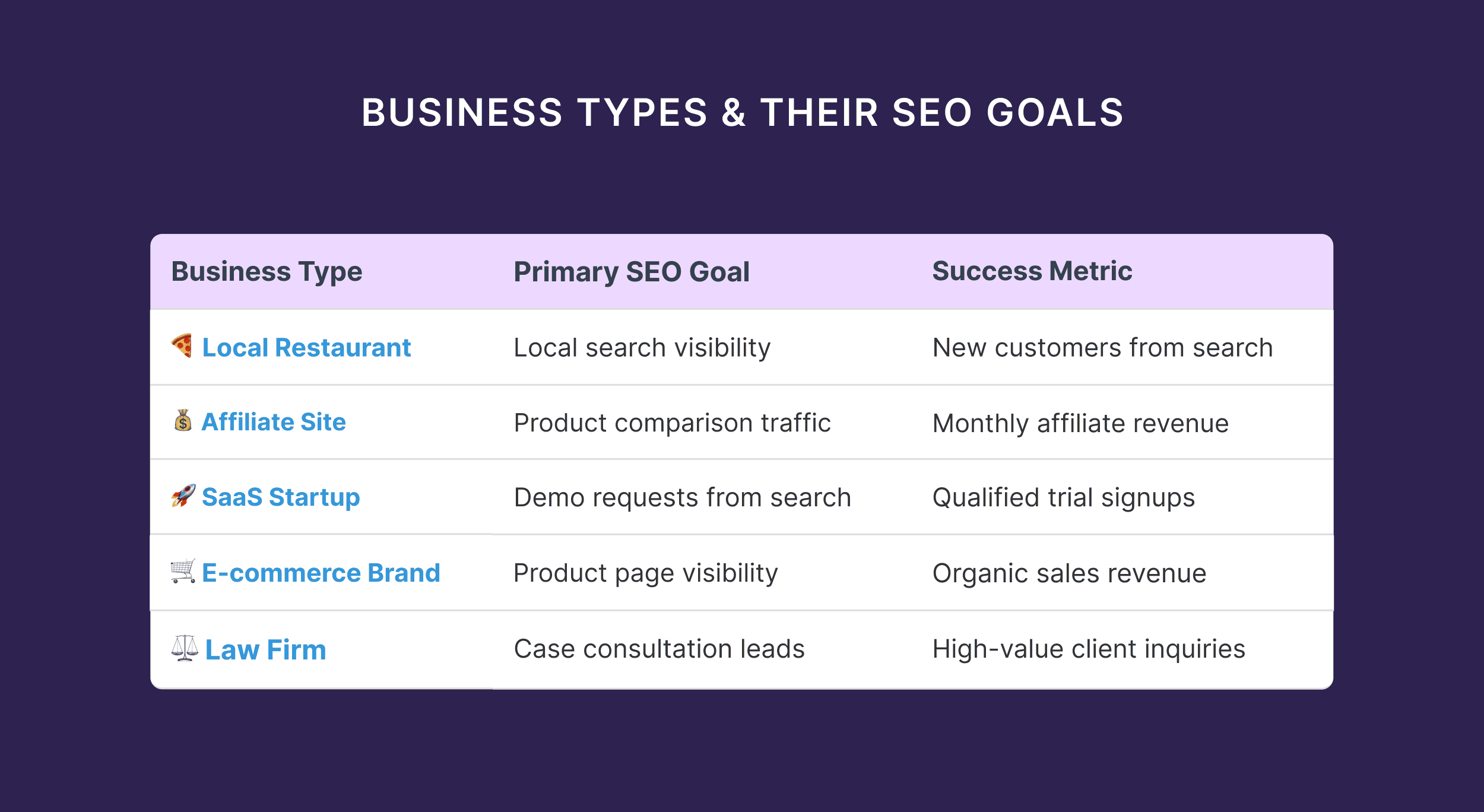
- Local restaurant: 50 new customers per month from “best Italian food [city]” searches
- Affiliate business: $10K monthly revenue from product comparison content
- SaaS startup: 200 qualified demo requests from bottom-funnel keywords
- E-commerce brand: 30% increase in organic revenue from product pages
None of these are “rank #1 for keyword X.”
These are business outcomes that matter, and they give you a framework for everything else you’ll do.
Map Goals to SEO Focus Areas
Once you know your business goals, you can identify the most impactful SEO activities.
Lead generation business (consulting, SaaS, services):
- Primary focus: Bottom-funnel commercial keywords
- Content priority: Problem-solution content, case studies, comparison pages
- Success metrics: Qualified leads, conversion rates, cost per acquisition
Revenue-focused business (e-commerce, affiliate):
- Primary focus: Product and money keywords
- Content priority: Product guides, reviews, buying intent content
- Success metrics: Organic revenue, transaction value, product page traffic
Local business (restaurant, dental, home services):
Track What You Can Measure (And Acknowledge What You Can’t)
Tracking the true business impact of SEO has become harder, not easier.
Users bounce between ChatGPT, Google, Reddit, and YouTube before converting.
AI tools don’t pass referral data.
Privacy changes reduce tracking accuracy.
And zero-click searches mean engagement happens without site visits.
So instead of chasing perfect attribution, focus on directional trends and leading indicators.
Track these reliably:Brand search volume trends (shows growing awareness)
Direct traffic increases (often indicates SEO influence)
Share of voice vs competitors on search and LLMs in your key topics
Organic traffic to high-converting pages
Customer lifetime value trends
Use qualitative data:
- Survey customers: “How did you first hear about us?”
- Track mentions in industry discussions and forums
- Monitor assisted conversions in Analytics (longer attribution windows)
Skip the vanity metrics:
Traffic to blog posts that don’t convert
Total keyword rankings (focus on commercial intent keywords instead)
Domain authority scores